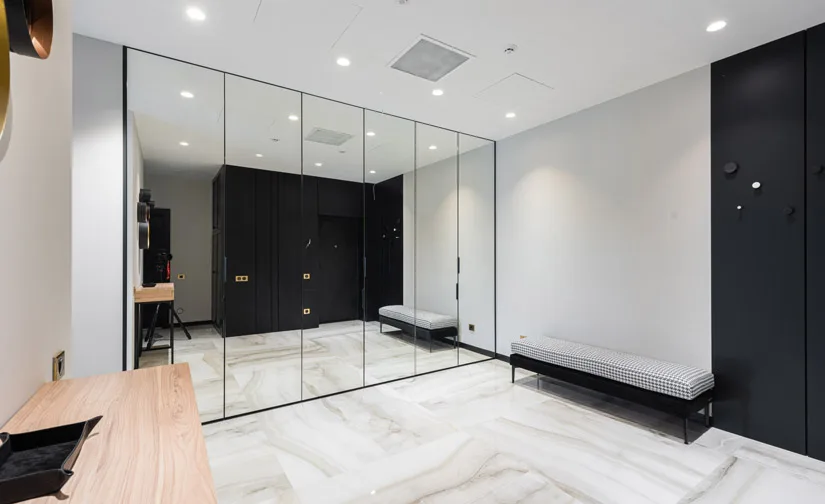
Mirrors are a powerful and versatile tool for improving and transforming living space, and a full mirrored wall is even more effective. Decorating a wall in this away allows you to refresh a room without the time and hassle of doing a comprehensive remodel or buying all new furniture. A variety of custom mirror possibilities makes it easy to tailor the mirrored wall to your specific design goals. Custom glass shops can also work with imperfect walls and walls with existing fixtures. Some of the first steps in designing a mirrored wall are understanding the possibilities and clarifying your goals for the finished installation. We’ll go over options, practical considerations, pro tips, and décor ideas in this handy guide.
1. What is meant by a mirrored wall?
2. What size mirrors are used to create a mirrored wall?
3. Can various types of mirrors be used?
4. What are my edgework options for a mirror covered wall?
5. How can a mirrored wall enhance a living room?
6. Are mirrored walls right for dining rooms?
7. What are the benefits of a mirrored wall in an entryway?
8. Do mirrored walls work in bedrooms?
9. How are wall mirrors installed?
10. How should I choose which wall to adorn with mirrors?
11. Are there care and cleaning tips for mirrored walls?
12. What is the process for having a mirrored wall installed?
Mirrors are created by applying a reflective metallic coating to the back of a piece of glass and then adding a protective layer that forms the mirror backing. A mirrored wall is a vertical surface partly or completely covered with mirrors. Besides choosing whether you want to put mirrors on the entire wall or just a section of it, you will choose between Entire Wall Installation and Wall with Border Installation.
Thus, a mirrored wall is created by covering a significant portion of a wall with reflective glass in your chosen style and dimensions.
Now that we have an understanding of mirrored wall basics, we’ll look at some of the variables that allow you to customize this installation and make it perfect for your particular space. Let’s start with FAQs about the size of mirrors used to cover a wall.

Can a wall be covered seamlessly with one piece of mirror glass?

Sometimes this is possible. For example, ABC Glass & Mirror can supply sheets of mirror as large as 60” x 120”, which is big enough to cover a small wall. However, it is important to remember that the mirror will also need to fit through the room’s doorway.
What if my wall is too big to be covered by a single mirror or the doorway won’t allow for a huge mirror to be brought in?
In this instance, a wall can be covered with two or more large mirrors if you want to maintain as seamless a look as possible.
Are walls ever covered with many small mirrors instead?
Yes, on the other end of the style spectrum, some homeowners want a mirror wall that looks “tiled” rather than seamless. This is also possible, and small square or diamond shaped mirrors are commonly used to create this kind of mirrored wall.

Your choice of the type of mirror glass is another way to make the mirrored wall special and perfect for your design goals. Options include:
Overall, normal mirror glass is the most popular pick, but antique and tinted options allow you to create a more unique mirrored wall in your home.

In addition to the mirror size and type, the edgework also impacts the finished look of the project. Polished edge mirrors have a level surface, and the edges are polished for smoothness and safety. This type of mirror is best when you want to create as seamless a look as possible. Other designs, however, deliberately emphasize each separate piece of reflective glass. In this case, a beveled edge is generally preferred as the bevel around each section serves as a defining border. Instances in which this approach might be used include:
While polished edges are ideal for a smooth, flowing look, beveled mirrors are perfect for dressing up a room and creating a mirrored wall that is a thing of beauty and charm.
A mirrored wall can totally transform a living room, making it look larger and giving it a more cheery aspect. Specific living room applications you might consider include:
If your living room could use a glow-up, the addition of a wall mirror is an easy way to refresh it without a full renovation.
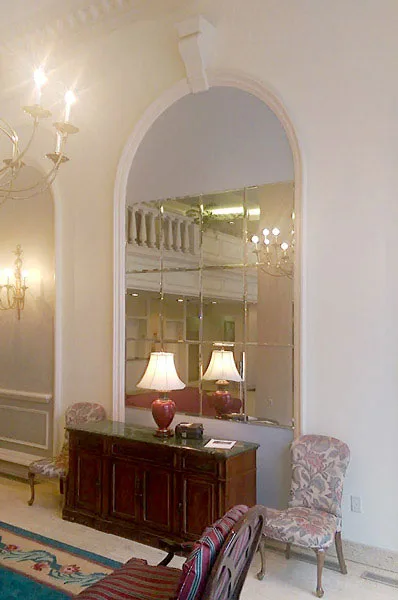
Mirror covered walls can also take a dining room from ordinary to memorable. Possibilities include:
If you’re giving this part of your home a makeover, there are other custom glass installations that can complement mirrors and further the effect. We’ve already mentioned glass wall shelves, and other possibilities include:

If your home’s entryway could use some TLC, a mirrored wall is one of the most effective items for transforming it. To begin with, many entryways are on the small side, and reflective glass creates the illusion of space. Also, a mirror covered wall instantaneously gives a space personality and a more intentional vibe. If you’re revamping the entryway overall, a mirrored wall can double the impact of other improvements such as a table placed in front of it or potted plants on either side. The entryway is often the first part of the house you see when coming home, so it makes sense to give it an attractive and welcoming appearance. Pair the wall mirror with one or more additional improvements like:

Ideally, every bedroom has a full length dressing mirror, making it easy to check your full ensemble before heading out the door. A mirrored wall serves this function but does so much more at the same time:

Wall mirror installation involves two factors: the need to hold the glass in place on the wall and the need for the weight of the mirror(s) to rest on a surface below them. Mirrors are generally held in place by a glue called mirror mastic, and small fasteners called mirror clips may be used as well. Whether a mirrored wall is created by a few large mirrors or many small ones, the bottom edge of the mirrored section will need to rest on the floor, trim, J-channel, or L-bar. We’ll take a closer look at the pros and cons of each option:
Not sure which approach is best suited to your needs and budget? ABC offers a free in-home consultation to go over possibilities and get answers to your questions from a mirror specialist.

Once you’ve decided to add a mirrored wall to a particular room, it’s time to choose its precise placement. Here are factors to consider as you choose a wall:
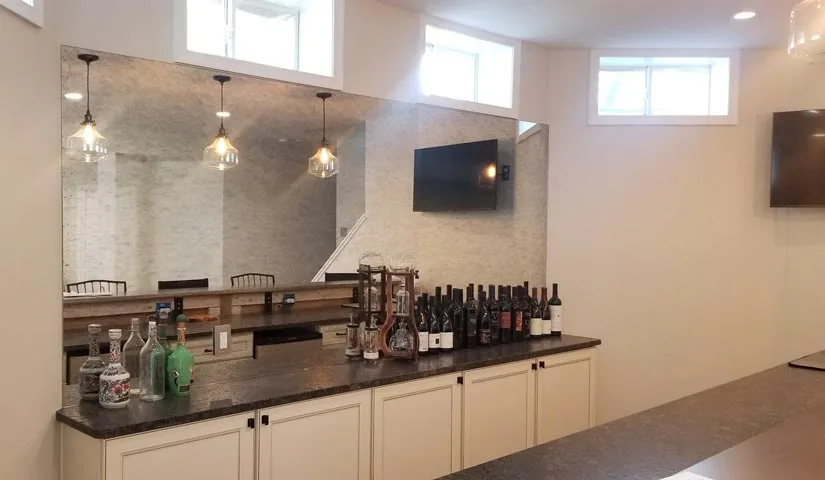
Absolutely! To begin with, it’s important to clean wall mirrors regularly so that they remain an asset and not a liability to the room’s aesthetic appeal. A Bob Vila article offers tips for successful mirror cleaning, including:
You also want to avoid inadvertently damaging the mirror or the surfaces around it. If an ammonia-based cleaner gets behind a mirror, it will eat away at the backing. Also, if you spray cleaner directly on a wall mirror, there is the risk that it will run down the mirror and onto the floor below it, which could harm wood or carpet in particular. For these reasons, spray the cleaning agent directly onto the microfiber cloth and then clean the mirror. Weekly cleanings are recommended, but you can spot clean and remove specks with a feather duster in between. Avoid anything harsh or abrasive that could scratch the glass surface.

If you’re ready to have a mirrored wall added to your home, the first step is contacting a custom glass shop such as ABC Glass & Mirror. We start off with a free in-home meeting with one of our glaziers who will show you samples, go over options, and answer questions. Next, we email you a price quote to consider on your timeline and in the comfort of your home. After you place your order, we prepare your mirrors and any necessary hardware and then schedule the install. To wrap things up, a trained team installs the mirrors and transforms your wall. In summary, the basic process looks like this:
To get started or to learn more, give our helpful team a call at (703)257-7150. The ABC Glass & Mirror team has been helping homeowners beautify their homes and improve their commercial spaces for over 20 years, and we’d love to be part of your project!


